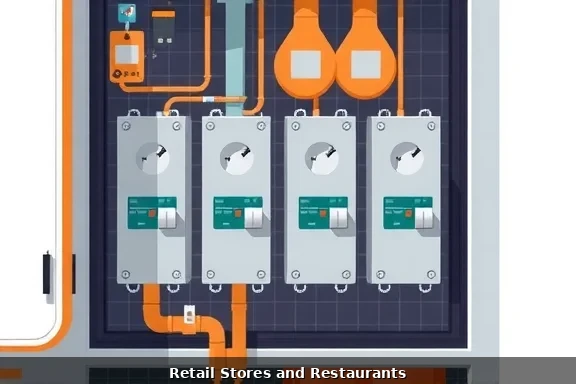
Service Entrance & Metering
The point where utility power enters your building. Design considerations include service voltage (120/208V, 277/480V), amperage rating (400A to 4000A+), metering type, and utility access locations.

A successful Denver business electrical design is the foundational blueprint that powers your commercial operations, ensures safety, and supports future growth.
This comprehensive planning guide provides Denver business owners, facility managers, and developers with the essential knowledge to navigate the complex process of designing a new electrical system or upgrading an existing one. From understanding local codes to planning for technological integration, we'll cover every critical step to ensure your project meets the unique demands of Denver's commercial landscape while optimizing for efficiency, reliability, and cost-effectiveness.
Denver Electrical Authority
Licensed & Insured • Since 2008
Commercial electrical system design is the detailed engineering process of planning, specifying, and documenting the electrical infrastructure for a non-residential building or facility. Unlike residential work, commercial design involves higher voltage systems, three-phase power, complex distribution networks, and stringent code requirements tailored to business operations.
In Denver, this process must align with the Denver Building and Fire Code, the National Electrical Code (NEC), and often specific utility requirements from Xcel Energy. A proper design addresses power distribution, lighting, life safety systems, data/communication cabling, and energy management, creating a cohesive system that supports daily operations and long-term business objectives. For a broader look at available services, explore our Complete Guide to Electrical Services in Denver: What's Available.
The point where utility power enters your building. Design considerations include service voltage (120/208V, 277/480V), amperage rating (400A to 4000A+), metering type, and utility access locations.
Network of panels, transformers, switchgear, and conduits routing electricity from service point to every outlet and machine. Includes main distribution panels, sub-panels, and circuit protection devices.
Ambient, task, and accent lighting layouts with high-efficiency LED fixtures. Integration of occupancy sensors, daylight harvesting, and programmable dimming systems to reduce energy costs.
Emergency egress lighting, exit signs, fire alarm systems, and backup power systems (generators or UPS) to keep critical systems operational during outages. Non-negotiable for code compliance.
Structured cabling for data networks (Cat6/Cat6a), telecommunications, security cameras, access control, and AV equipment. Conduit pathways for future cabling are critical design elements.
Safety system providing path for fault current to safely trip breakers and prevent dangerous voltage potentials. Especially important in Denver due to specific soil conditions and rigorous inspections.
Attempting a commercial electrical project without a professional design is a high-risk endeavor that can lead to catastrophic failures, code violations, and operational downtime. Professional design mitigates these risks through expert planning and foresight.
Denver has a multi-layered regulatory environment. A professional designer ensures your system complies with:
A design flaw discovered during inspection can cause costly delays, requiring walls to be opened and work to be redone. A licensed Commercial Electrician Denver: Complete Business Electrical Solutions professional navigates this process seamlessly.
Electrical faults are a leading cause of commercial property fires. Professional design prioritizes safety through:
75%
Fire Risk Reduction
100%
NEC Compliance
24/7
Safety Monitoring
0
Safety Incidents
A thoughtfully designed system is an energy-efficient system. Strategic design choices can yield significant long-term savings:
A flexible design adapts to your evolving business needs. This includes:
Following a structured process is key to a successful project. This how-to guide outlines the critical phases from initial concept to final energization.
This foundational phase defines the project's scope and goals. It involves collaborative meetings between the business owner, an electrical design professional, and often the architect or general contractor.
Key Activities:
Deliverable: Project Scope Document
In this phase, the designer translates operational needs into initial electrical concepts. The focus is on "what" and "where," not detailed specifications.
Key Activities:
Deliverable: Schematic design drawings
This is the core engineering phase where all concepts are fully developed, specified, and coordinated with other building systems.
Key Activities:
Deliverable: Design development drawings
The design is finalized into a permit-ready package that a contractor can precisely price and build from.
Key Activities:
Deliverable: Construction Document set
The designer's role continues during construction to ensure the built system matches the design intent and complies with all codes.
Key Activities:
Deliverable: Energized, code-compliant system
Different industries have unique electrical demands. Tailoring your design to your specific business model is crucial.
Modern offices are defined by flexibility and technology. Design must support a dynamic environment.
These spaces require robust systems for customer experience, point-of-sale, and specialized equipment.
Durability, capacity, and safety for heavy machinery are the priorities in industrial settings.
Denver presents a distinct set of local rules that directly impact electrical design.
Xcel Energy is the primary utility for Denver. Their requirements influence design:
The Xcel Energy service application process (8-16 weeks) often runs parallel to design but must be completed before construction can finish. Initiate utility dialogue immediately after project conception.
Use this actionable checklist to prepare for your electrical design project.
Ready to Start Your Project?
Get Expert Design Help
The timeline varies significantly by project size. A small tenant finish-out may have a 2-4 week design phase, while a large ground-up commercial building can take 3-6 months for full design and permitting. The Xcel Energy service application process (8-16 weeks) often runs parallel to design but must be completed before construction can finish.
Design fees are typically 5-15% of the total project construction cost. They can also be structured as a fixed fee, hourly rate, or cost per square foot. For an initial budget estimate, using our Denver Electrical Cost Calculator can provide helpful benchmarks before engaging a designer.
It is strongly discouraged. Commercial vs Residential Electrical Work in Denver: Key Differences are substantial, involving
Have more questions about your commercial electrical project?
View All FAQs
From initial design to final inspection, our licensed commercial electricians ensure your project meets all Denver codes while optimizing for efficiency and growth.